
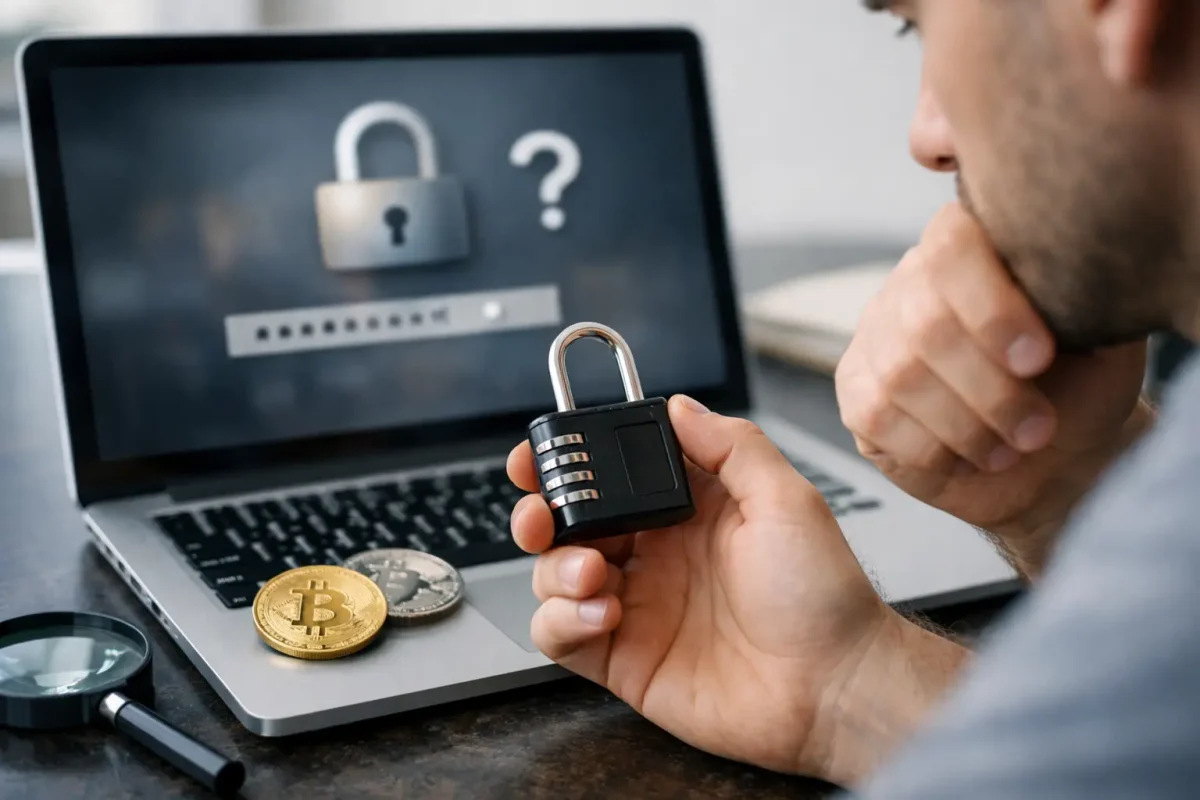
A forgotten wallet password can turn a visible crypto balance into an inaccessible asset overnight. If you need to recover forgotten crypto wallet password access, the right response is not repeated guessing or downloading a random recovery tool. It is a controlled process that protects the wallet data, identifies what type of access has been lost, and determines whether recovery is technically possible.
The distinction matters. A password-protected wallet may be recoverable when you retain the original file, device, or partial password clues. A lost seed phrase or private key presents a different and often more limited situation. Knowing which problem you have prevents costly mistakes and helps preserve every legitimate recovery option.
Act Carefully Before Trying to Recover a Forgotten Crypto Wallet Password
Your first priority is preserving the evidence of ownership and access. Do not delete the wallet app, factory-reset the device, reinstall software over existing data, or move files between devices without making secure copies. A single overwritten wallet file, browser profile, or backup can eliminate information needed for a technical recovery attempt.
Create read-only copies of relevant wallet files and document where the wallet was originally used. This may include an old laptop, external drive, phone, cloud backup, USB device, email archive, password manager, or printed notes. If the wallet was used years ago, the original device may contain a wallet database, encrypted backup, browser extension data, or password fragments that are no longer available elsewhere.
Avoid entering possible passwords repeatedly on a hardware wallet or any platform that imposes lockout limits. Some devices increase waiting periods after failed attempts, while others may be configured to wipe after a defined number of incorrect entries. If the balance is meaningful, pause before continuing and confirm the wallet’s security behavior.
Is Password Recovery Technically Possible?
There is no universal password reset button in self-custody cryptocurrency. Decentralized wallets are designed so that no bank, exchange, or blockchain administrator can override an encrypted password. That protection is a major benefit when you control access, but it also means recovery depends on the specific wallet architecture and the records you still possess.
Recovery may be feasible when you have the encrypted wallet data and can provide credible password patterns. For example, you may remember that the password contained a name, a year, special characters, a phrase, or a variation you used during a certain period. Professional recovery work can test carefully constructed candidate patterns against a preserved wallet file rather than relying on unlimited, blind guessing.
The outlook changes if you have lost the seed phrase and private key completely. A seed phrase is not simply a password. It is the cryptographic backup that generates wallet access. Without it, the original wallet data, or an available unlocked device, there may be no technical route to recreate the wallet. Anyone who guarantees otherwise without examining the facts is not offering a credible assessment.
Identify the Type of Wallet You Used
Start by identifying whether the inaccessible assets were held in a software wallet, hardware wallet, browser extension, exchange account, mobile wallet, or Bitcoin Core installation. The recovery path changes with each one.
A software wallet may store encrypted data locally. Older Bitcoin wallets can use wallet.dat files, while other applications may create proprietary backup files, key stores, or encrypted application folders. Browser wallets may rely on an encrypted vault stored in the browser profile. Hardware wallets typically require the device PIN and recovery phrase, though the exact options depend on the manufacturer and setup.
Exchange accounts are different because the platform controls the custody layer. Forgotten account passwords may be resolved through official identity verification, but lost two-factor access, compromised email accounts, or withdrawal issues can complicate the process. Never confuse an exchange login password with a self-custody wallet password. The recovery methods and risks are not the same.
Build a Useful Password Evidence Record
A vague statement such as “I used something complicated” rarely supports an efficient recovery attempt. Specific, private context can make a material difference. Write down what you remember before trying more passwords, including details that may initially seem insignificant.
Helpful evidence can include the approximate year the wallet was created, words or themes you used at that time, former addresses or phone numbers, keyboard layouts, capitalization habits, favorite symbols, password length, and whether you commonly substituted numbers for letters. Consider whether you changed passwords after a move, new job, relationship, or device upgrade. Patterns are often more valuable than a long list of random guesses.
Keep this record offline and confidential. Do not post password clues in online forums, send them to strangers, or enter a seed phrase into a website claiming it can check recovery eligibility. A legitimate recovery process does not require you to expose sensitive credentials in an unsecured form.
If you have multiple possible wallet files, label each one with its source and date. Do not assume the newest file contains the correct balance. An older backup can hold the key material associated with addresses that were later removed, migrated, or no longer visible in a newer installation.
When Professional Wallet Recovery Makes Sense
Professional assistance is most appropriate when the wallet contains assets of meaningful value, the data is encrypted or damaged, or your own attempts have reached a dead end. It is also appropriate when the situation involves a Bitcoin Core DAT file, a corrupted drive, a legacy wallet application, or uncertainty about whether a wallet file is genuine and complete.
A qualified recovery provider should begin with a case evaluation, not an instant promise. The assessment should establish the wallet type, available data, likely recovery paths, technical constraints, and confidentiality requirements. From there, forensic analysis can determine whether preserved files contain recoverable structures and whether targeted password reconstruction is justified.
Annonymously applies blockchain forensic analysis and proprietary BlockSprint AI™ capabilities to complex digital-asset recovery cases, including wallet-access restoration and damaged wallet data. The aim is to replace uncontrolled trial and error with an evidence-led recovery strategy while protecting the client’s privacy and remaining assets.
Recovery is not guaranteed. Strong encryption is meant to resist unauthorized access, so a password with no surviving clues may be impractical to recover. A reputable specialist will be direct about that trade-off rather than claiming that every wallet can be opened.
Do Not Let a Lost Password Become a Second Loss
People who cannot access crypto are frequent targets for recovery scams. Fraudsters monitor social media posts and contact victims with claims that they can recover any wallet within hours. Some demand an upfront “activation” fee. Others request a seed phrase, remote access to a computer, or payment in crypto before providing an evaluation.
Treat those requests as immediate warning signs. No legitimate provider needs your seed phrase to determine whether a password-recovery case may be viable. Do not install remote-control software at the request of an unsolicited contact, and do not move funds from any wallet that remains accessible into an address supplied by a supposed recovery agent.
Use a separate, secure channel to retain case notes, wallet copies, and proof of asset ownership. If theft or fraud is also involved, preserve transaction IDs, receiving addresses, screenshots, platform messages, and payment records. Those records can support blockchain tracing and help distinguish a recoverable access issue from an outbound transfer that requires a different response.
Preserve What You Have, Then Choose the Next Step
The most valuable action is often the one you do not take: do not erase the device, reveal a seed phrase, or trust a promise that ignores the technical facts. Preserve the wallet data, organize your password clues, and seek a confidential professional evaluation if the asset value and available evidence justify it. A disciplined recovery process gives an inaccessible wallet its best legitimate chance of being restored.
