
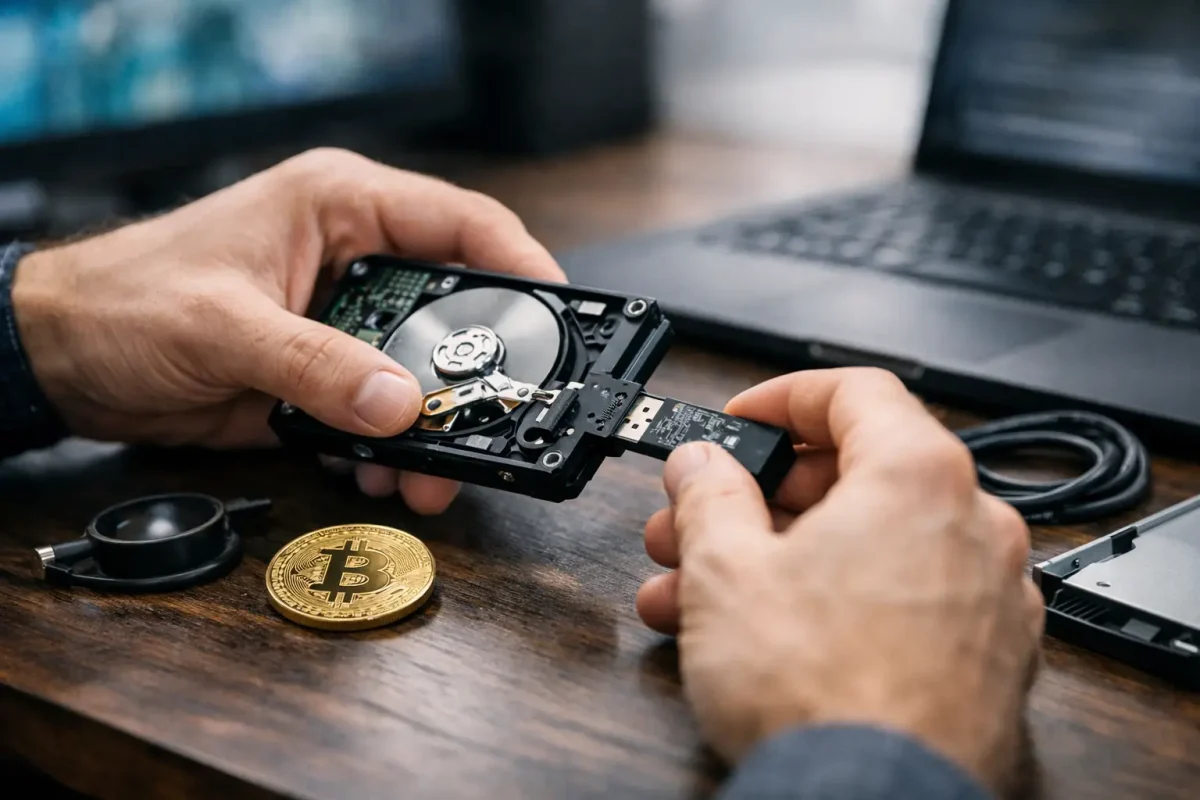
A damaged or missing Bitcoin Core wallet.dat file can turn a familiar wallet balance into an inaccessible asset. If you need to recover bitcoin core dat file data, the first objective is not to make changes or reinstall software. It is to preserve every possible copy of the original file, the device it lived on, and the evidence that may help reconstruct wallet access.
Bitcoin Core DAT-file recovery can be technically demanding, particularly where a drive has failed, a wallet has been encrypted with a forgotten passphrase, or malware may have altered local wallet data. The right response depends on what happened. Some cases involve a healthy wallet.dat file in the wrong folder. Others require file-system recovery, database repair, key extraction, or a forensic review of a compromised computer.
What a Bitcoin Core wallet.dat file contains
Bitcoin Core traditionally stores wallet information in a file called wallet.dat. Depending on the wallet version and configuration, this file may contain private keys, key metadata, transaction records, address book entries, and encrypted key material. Private keys are the critical element: they authorize control of Bitcoin associated with an address.
A wallet.dat file is not the Bitcoin itself. Bitcoin remains recorded on the blockchain. The file may hold the cryptographic credentials needed to spend it. That distinction matters because recovering access is often possible even when the original Bitcoin Core installation no longer opens, provided recoverable private-key data remains somewhere on the device, backup media, or an older copy.
Modern Bitcoin Core configurations may use a wallet directory with database files rather than relying on one simple wallet.dat workflow. Even so, users commonly refer to the entire issue as a DAT-file recovery. A professional assessment should identify the precise wallet format before any repair attempt begins.
Stop before you overwrite valuable evidence
The most preventable recovery failures happen after the loss, not before it. Reinstalling Bitcoin Core, creating a new wallet in the same location, running disk-cleanup software, or repeatedly attempting repairs can overwrite fragments of the original wallet data.
If the file was deleted, the computer should be used as little as possible. Shut it down if practical, disconnect it from the internet if compromise is suspected, and do not install recovery utilities onto the affected drive. Every write operation can reduce the chance of restoring deleted sectors.
Create working copies before attempting any action. Preserve the original wallet.dat file, related wallet folders, external-drive copies, old laptop backups, cloud backup archives, and system images. Label copies with dates and sources. Keep the originals offline and do not email them to anyone.
Treat a wallet.dat file as highly sensitive financial material. A legitimate recovery specialist may need to analyze encrypted wallet structures or device artifacts, but no one needs your seed phrase or private keys through an unsolicited message. Be especially cautious of strangers claiming they can recover funds instantly, requesting an upfront transfer in crypto, or asking you to enter wallet credentials into a website.
Identify the recovery scenario
The recovery path changes significantly based on the condition of the file and the device. A clear timeline helps establish which approach is appropriate.
The wallet.dat file still exists
If the file is present, avoid assuming it is corrupted. It may be from an older version of Bitcoin Core, located in an archive, or associated with a different data directory. A copy of the file can be tested in a controlled environment without exposing or altering the original.
If the wallet opens but requests a passphrase you cannot remember, the issue is wallet-access restoration rather than file repair. The likely recovery options depend on the strength and pattern of the passphrase, any partial phrases you remember, and whether you kept notes, password-manager records, or historical device backups.
The file was deleted or the drive was formatted
Deleted wallet files may remain recoverable until storage sectors are overwritten. Traditional hard drives can retain recoverable data longer than actively used solid-state drives, where TRIM and background maintenance may make recovery more difficult. Difficulty is not the same as impossibility, but speed and evidence preservation matter.
Recovery work may involve identifying deleted wallet files, examining unallocated space for wallet signatures, reconstructing fragmented records, and reviewing old backups. A file recovered by name alone is not necessarily usable. Its internal structure and potential key material must be validated carefully.
Bitcoin Core crashes or reports wallet corruption
A crash can result from database corruption, incomplete synchronization, disk errors, permission problems, or an incompatible software environment. Do not repeatedly run repair commands against your only copy. Wallet-repair tools may be useful in limited situations, but they can also modify records and make later analysis harder.
A controlled forensic copy allows specialists to assess whether the data can be repaired, whether keys can be extracted, and whether relevant records exist elsewhere. In some cases, the best outcome is not repairing the original wallet file but recovering valid private-key material and restoring access through a secure, newly created wallet.
The computer may have been compromised
If wallet access failed after a suspicious download, remote-access session, fake support interaction, or malware alert, preserve the device and document the suspected incident. The recovery scope may include both local wallet restoration and blockchain forensic analysis to determine whether funds were moved.
If Bitcoin has already left your addresses, no local file repair can reverse a confirmed blockchain transaction. However, transaction tracing can clarify destination paths, identify scam-wallet patterns, and preserve evidence for targeted recovery action where viable.
A safe process to recover a Bitcoin Core DAT file
Start with preservation, then move methodically. The sequence below protects options while avoiding common mistakes.
First, document what you know: the device type, operating system, approximate wallet creation date, Bitcoin Core version if known, last successful access, possible passphrases, and all backup locations. Screenshots of error messages can help, but never publish wallet addresses, files, or recovery details in public forums.
Next, locate every possible wallet copy. Search old computers, external drives, USB devices, encrypted backup volumes, email attachments you sent to yourself, and archived folders. Older wallet copies can contain keys for addresses that still hold Bitcoin, even when they do not show recent transaction history.
Then, preserve the storage media. A forensic disk image is preferable to casual drag-and-drop copying when deletion, corruption, or malware is involved. It captures recoverable artifacts beyond visible files and lets technical work proceed without risking the original drive.
After that, validate the data in an isolated environment. The goal is to determine whether the recovered artifact is a genuine Bitcoin wallet database, whether its key records are intact, and whether encryption is present. This stage should not involve uploading the wallet to an unknown online “recovery” tool.
Finally, choose the least invasive recovery method that fits the evidence. That may mean restoring a valid backup, repairing a database copy, conducting a constrained passphrase recovery effort, extracting recoverable keys, or investigating outgoing transactions. The correct method is evidence-led, not a one-size-fits-all repair command.
When professional Bitcoin Core DAT-file recovery is justified
Basic troubleshooting may be appropriate when you have a known-good backup and a simple installation issue. Professional assistance becomes more valuable when meaningful funds are involved, the file is damaged or deleted, a password is partly forgotten, or theft is suspected.
A qualified recovery team should explain its assessment process, protect confidentiality, and avoid guarantees it cannot support. No ethical provider can promise access without knowing whether valid key material exists or whether an encrypted passphrase can be reconstructed. Honest expectations are a sign of technical discipline.
Annonymously approaches complex wallet cases through secure case evaluation, wallet-access analysis, and blockchain forensics where transaction activity requires investigation. Its BlockSprint AI™ platform is designed to support data analysis, wallet reconstruction, fraud-pattern detection, and targeted recovery work while keeping the process focused on evidence and asset protection.
Before engaging any service, ask how original files are handled, whether analysis is performed on copies, what information is genuinely required, and how sensitive data is secured. Avoid services that pressure you to act immediately without explaining the technical basis for their proposed recovery path.
Protect your wallet after recovery
Once access is restored, do not continue using an environment that may be unstable or compromised. Move assets only after verifying the recovery process and creating a new, secure destination wallet under your control. Use a strong, unique passphrase, retain backups in separate secure locations, and test your backup plan before you need it.
For significant holdings, separate recovery information from daily-use devices and keep an inventory of where backups exist. A wallet.dat file can be recoverable, but prevention remains less stressful and less expensive than rebuilding access after a device failure.
If your Bitcoin Core wallet data is missing, corrupted, or locked behind a forgotten passphrase, preserve the evidence first. A careful next step can keep a difficult situation recoverable; a rushed one can permanently narrow the path back to your assets.
