
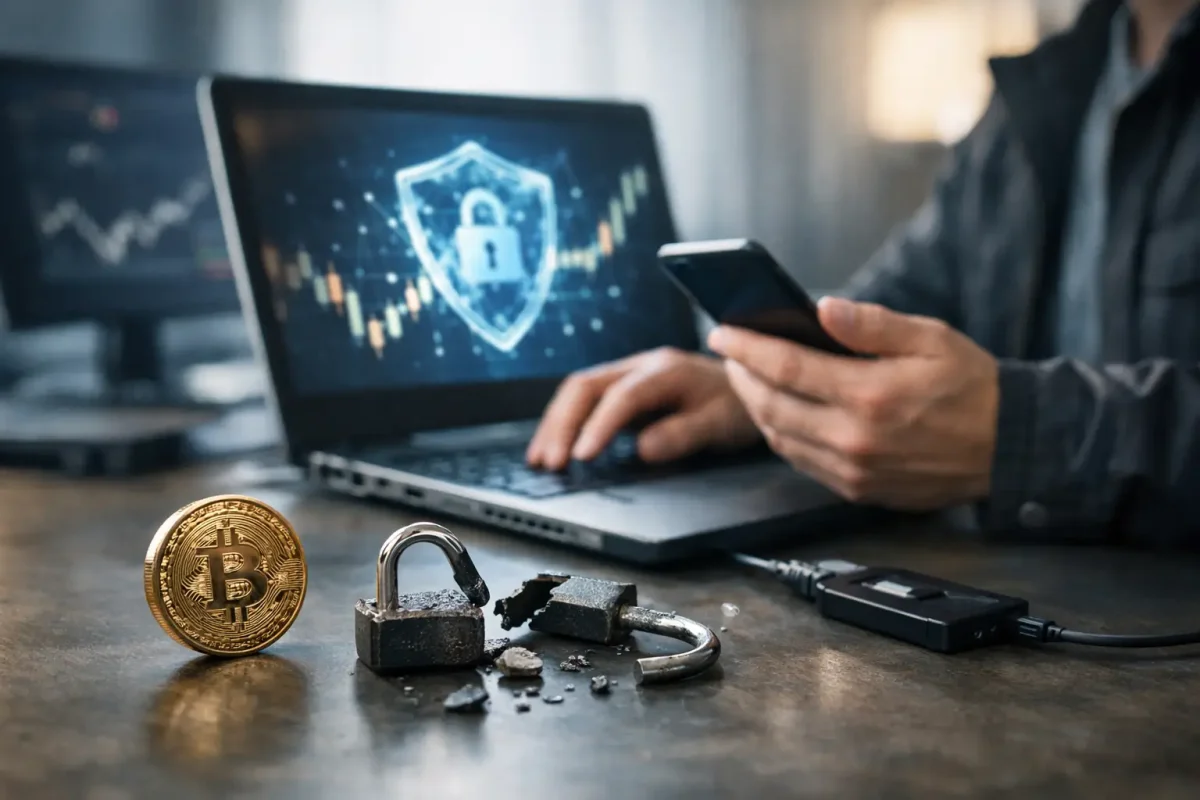
A stolen crypto transaction can feel final the moment it appears on a block explorer. The funds may have left your wallet in seconds, support may offer limited options, and the person or platform behind the theft may suddenly disappear. Yet the right response can preserve critical evidence and create a real path to recover stolen cryptocurrency through professional blockchain forensic work.
Speed matters, but panic is costly. Do not send additional funds to a supposed recovery agent, attempt to negotiate with the scammer, or share your seed phrase in exchange for help. Your first job is to secure what remains. The next is to document the theft in a way that supports tracing, exchange intervention, and a targeted recovery strategy.
First, Contain the Damage
If a thief may still have access to your wallet, exchange account, email, or phone number, act immediately. Move any remaining assets to a newly created wallet only if you still control the compromised wallet and can do so safely. Create the new wallet on a trusted device, record the seed phrase offline, and never reuse a seed phrase from the affected wallet.
Change the passwords for your email account, exchange accounts, and any connected financial services. Enable app-based two-factor authentication rather than SMS where possible. If you suspect a SIM-swap attack, contact your mobile carrier and ask it to place a port-out lock or equivalent protection on your number.
For browser wallets, revoke suspicious token approvals after moving remaining assets. A malicious approval may allow an attacker to continue draining a wallet even after the initial theft. This is particularly common after users connect a wallet to a fake decentralized finance site, a fraudulent mint page, or a copied version of a legitimate service.
Do not erase devices, browser histories, emails, or chat records. What looks like clutter can become evidence. Screenshots alone are useful, but original files, wallet logs, emails, transaction IDs, and platform messages are more valuable for a forensic investigation.
Build an Evidence File Before Details Fade
Recovery efforts are stronger when the facts are organized early. Create a timeline that begins with your first contact with the scammer or suspicious platform and ends with the last known transaction. Include dates, times, amounts, wallet addresses, transaction hashes, exchange names, websites, social-media profiles, and every payment request.
Keep copies of deposit confirmations, withdrawal attempts, account statements, and communications. If the loss involved a fake trading or investment website, capture the website address, account dashboard, stated balances, customer-service conversations, and the exact instructions used to deposit funds. A balance displayed on a fraudulent platform is not proof that funds remain there, but it may reveal the fraud pattern and the parties involved.
Avoid editing the originals. Save copies in a secure location and maintain a clear folder structure. A professional investigator needs to distinguish between the transaction you authorized, the transaction a criminal initiated, and any later transfers made by connected wallets.
How Professionals Recover Stolen Cryptocurrency
Blockchain transactions are generally irreversible at the protocol level. That does not mean every case is hopeless. Recovery depends on where the stolen assets traveled, how quickly the movement is identified, the blockchain used, and whether the funds touch a service capable of responding to a valid fraud report or legal request.
A professional recovery process begins with blockchain forensics. Investigators analyze the source address, destination address, transaction timing, asset type, and subsequent wallet activity. They look for patterns that connect addresses to a broader scam operation, including consolidation wallets, swap activity, bridge transfers, mixer exposure, and deposits into centralized exchanges.
Address clustering can be especially valuable. Criminals often use many wallet addresses, but their transaction behavior can reveal operational links. Repeated fee funding, common withdrawal routes, synchronized transfers, or movement into the same holding wallet may establish a pattern that a single transaction view cannot show.
The practical objective is to identify a recoverable point of contact. In some cases, stolen assets are sent to a regulated exchange or another custodial service where an account holder may be identifiable. Fast, well-documented reporting can help preserve the possibility of a freeze or review. In other cases, tracing establishes a detailed evidentiary record for law enforcement, legal counsel, insurers, or compliance teams.
Annonymously applies proprietary BlockSprint AI™ capabilities to analyze transaction trails, detect scam-wallet clusters, and support targeted recovery execution. The work is confidential and case-specific because the route of a stolen Bitcoin transaction is not the same as a drained Ethereum wallet, a fraudulent USDT investment scheme, or a cross-chain theft involving bridge transfers.
When Recovery Is More or Less Likely
No ethical recovery service can guarantee that stolen funds will be returned. Anyone who promises a guaranteed result before examining the evidence deserves serious skepticism. The chance of recovery depends on the facts, not on the confidence of a salesperson.
Cases can be more actionable when the theft is recent, the transaction hash is available, the assets remain traceable, and the funds enter a centralized exchange or other identifiable service. Recovery can be more difficult when a criminal rapidly swaps assets across chains, uses privacy-focused tools, cashes out through unregulated channels, or disperses funds across a large network of wallets.
That difficulty is exactly why early action is essential. A delay of days or weeks can give a scam operation more time to layer transactions and reduce the practical options available. Even in complex cases, a forensic analysis can provide clarity about what happened and whether further recovery action is justified.
Report the Theft Through the Right Channels
A forensic report does not replace an official report. File a complaint with the appropriate law-enforcement and consumer-protection authorities in your jurisdiction. If an exchange, payment service, or social-media platform was involved, report the incident directly through its official support and fraud channels.
Be factual and precise. Provide wallet addresses, transaction hashes, dates, losses, and supporting records. Do not inflate a claim or rely on assumptions about who controlled a wallet. Clear evidence is more useful than speculation.
If stolen funds were sent from an exchange account, notify the exchange immediately and ask for its fraud or security team. If you sent crypto to a scam platform from a bank account or card-funded purchase, contact the bank or card issuer as well. A bank may not reverse an on-chain crypto transfer, but it may investigate related unauthorized activity or help protect your accounts from additional compromise.
Protect Yourself From Recovery Scams
People searching for help after a loss are often targeted again. Recovery scammers monitor public comments and victim forums, then claim they can retrieve funds through a “hacker,” a special blockchain tool, or an insider at an exchange. They may demand an upfront fee, request remote access to your device, or ask for your seed phrase to verify ownership.
A legitimate provider does not need your seed phrase or private key to trace a transaction. Those credentials give complete control over a wallet. Never disclose them, even to someone presenting a badge, a testimonial, or a convincing website.
Watch for pressure tactics. Claims that you must pay immediately to meet a “freeze deadline,” fund a gas-fee release, or activate an account often signal fraud. Genuine recovery work should begin with a clear case evaluation, defined evidence requirements, transparent communication, and realistic discussion of limitations.
A Controlled Path Forward
The strongest response to crypto theft is organized, secure, and evidence-led. Secure your remaining accounts, preserve every record, document the transaction trail, and obtain a professional assessment before spending more money or communicating further with the people behind the loss.
Stolen cryptocurrency is a high-stakes problem, but you do not need to navigate it blindly. A disciplined forensic review can turn a confusing transaction trail into actionable facts, protect you from further harm, and give your case the serious attention it deserves.
