
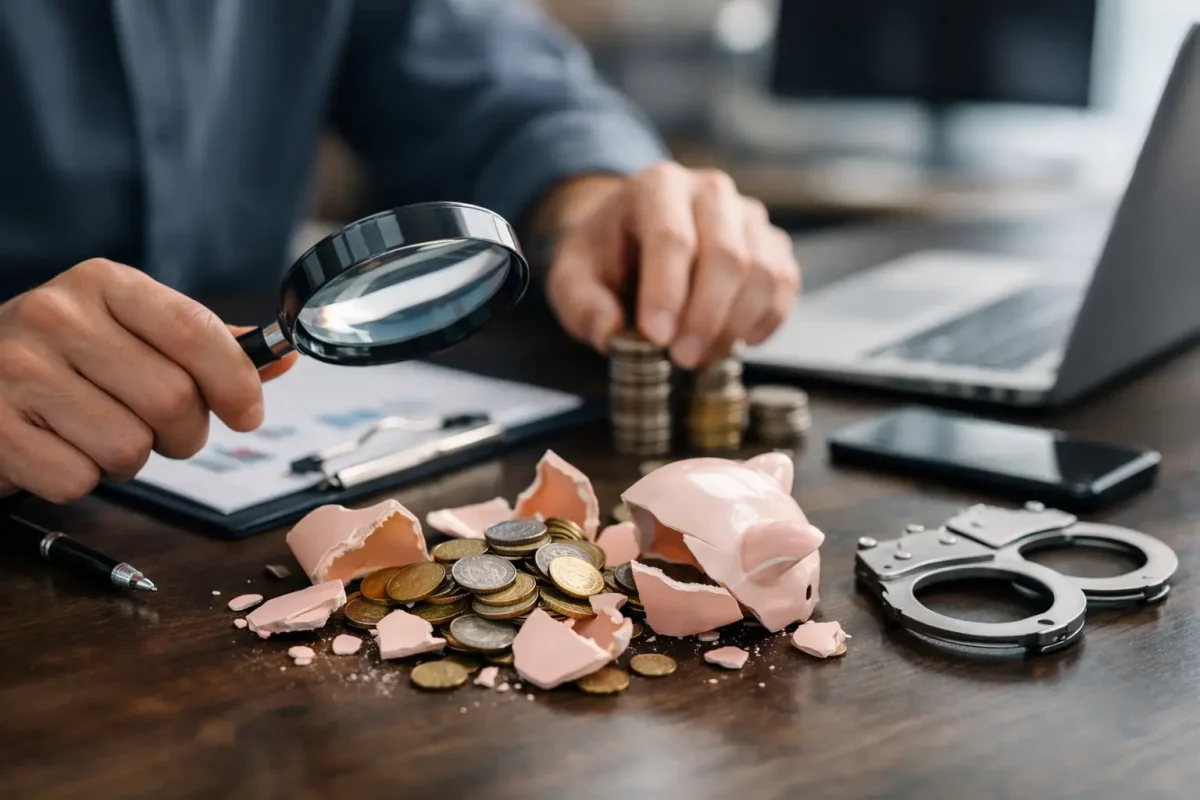
A fake trading dashboard can make a loss feel temporary. It may show profits, pending withdrawals, or a final “tax” payment required to release your balance. But when deposits have been sent to an unknown wallet, investment scam recovery must begin with facts, not another payment. The decisions made in the first hours and days can protect evidence, prevent further losses, and give a forensic team a clearer basis for tracing what happened.
Crypto transactions are generally irreversible once confirmed. That does not mean every case is hopeless. It means a credible recovery effort depends on preserving the transaction trail, identifying the scam operation’s methods, and acting only where there is a realistic technical, operational, or legal path forward.
How Investment Scam Recovery Actually Begins
The first priority is containment. Stop communicating with the scammer, their supposed account manager, or anyone pressuring you to send a release fee, verification deposit, insurance charge, or tax payment. Fraudulent investment platforms commonly use these demands to extend the scam after an attempted withdrawal.
Do not delete chats, emails, text messages, screenshots, wallet notifications, exchange receipts, or the website address. Even a conversation that feels embarrassing or repetitive can contain valuable details: payment instructions, wallet addresses, names used by the operators, time stamps, promised returns, or a link between multiple accounts.
Next, secure every account that may have been exposed. Change passwords from a clean device, enable multi-factor authentication, revoke suspicious connected applications, and review email forwarding rules. If you shared a seed phrase or private key, move any remaining assets to a newly created wallet with a new recovery phrase. A compromised wallet should not be treated as safe simply because the scammer has stopped responding.
For victims who paid from an exchange, preserve the withdrawal confirmation and contact the exchange’s fraud or compliance channel promptly. Provide the transaction hash, destination address, date, amount, and a concise description of the fraud. An exchange cannot reverse a completed blockchain transaction, but timely reporting may help document the event and, in certain circumstances, identify activity involving a regulated platform.
The Evidence That Gives a Case Direction
A strong case file turns a confusing story into an investigable record. Start with a simple timeline: how contact began, when you were asked to invest, every amount sent, the wallets or platforms involved, attempted withdrawals, and every additional payment demand. Keep the timeline factual. You do not need to understand every technical detail before asking for help.
The core records usually include transaction hashes, sending and receiving wallet addresses, exchange account records, screenshots of the investment site, chat logs, emails, phone numbers, and payment instructions. If the scam involved a romance or social-media connection, preserve the profile details and the earliest messages. These details can reveal a repeatable fraud pattern rather than an isolated interaction.
Blockchain forensics examines the public transaction history connected to a wallet address. Analysts can follow movements across addresses, assess transaction timing, identify patterns associated with known scam behavior, and map points where assets may have reached exchanges, swap services, bridges, or other infrastructure. The quality of that analysis depends on complete information. One missing transaction can interrupt the chain of evidence.
A forensic trace is not a promise that funds will be returned. Scammers often split assets, use multiple wallets, convert between assets, or move funds across networks. Still, tracing can establish where assets traveled, support reports to relevant parties, and determine whether targeted recovery action is appropriate. Honest guidance includes that distinction.
Why Fake Investment Platforms Are So Effective
Many investment scams are engineered to look more convincing than ordinary phishing attempts. A polished website may display live-looking charts, account managers, trading histories, and profits that rise every day. The numbers are often controlled by the operator. They are not proof that your cryptocurrency was invested, traded, or held in your name.
The scam may begin with an unsolicited message, a social-media introduction, a dating-app relationship, or a convincing advertisement. Trust is built gradually. Small withdrawals may even be permitted early on to encourage a larger deposit. Once the victim attempts to withdraw a meaningful amount, the platform introduces a barrier: taxes, anti-money-laundering verification, a margin call, a frozen account, or an alleged network fee.
No legitimate recovery process requires you to send cryptocurrency to an unknown address to “activate” a refund. Be equally cautious of people who contact you after the loss and claim they have already located your funds. Recovery scammers often obtain victim details from the original fraud, public complaint threads, or data lists shared between criminals.
What Professional Recovery Work Can and Cannot Do
Specialist recovery work combines investigative discipline with technical knowledge of wallets, transactions, and digital-asset infrastructure. It may involve transaction tracing, scam-wallet clustering, fraud-pattern analysis, evidence organization, wallet-access assessment, and targeted outreach or reporting based on the facts of the case.
At Annonymously, cases are evaluated through a confidential process designed to establish what was lost, where assets moved, and which recovery options are technically credible. Its BlockSprint AI™ platform supports blockchain tracing and pattern detection, while case handling remains focused on the evidence unique to each client.
The limits matter as much as the capabilities. No professional can lawfully reverse a confirmed blockchain transaction by force, retrieve funds from a wallet they do not control without a valid mechanism, or guarantee an outcome before analysis. A service that promises a guaranteed recovery, demands secrecy, or asks for your seed phrase is creating a new risk, not reducing one.
Recovery may be more feasible when a transaction trail reaches an identifiable service, when assets remain in observable wallets, when an exchange can review a timely report, or when wallet data can be reconstructed. It may be more difficult when scammers have rapidly laundered assets through multiple services or when records are incomplete. A responsible evaluation explains these variables clearly.
A Secure Four-Stage Path Forward
A structured recovery process prevents guesswork. First, submit the case details and available evidence for an initial assessment. The goal is to understand the asset type, wallet addresses, transaction history, platform used, and the nature of the loss.
Second, investigators conduct blockchain forensic analysis and organize the findings into a coherent transaction path. This stage may identify connected wallets, asset movements, and relevant exposure points. Third, the team determines an execution strategy based on the evidence, which can include wallet restoration work, technical recovery measures, or targeted fraud-recovery actions appropriate to the case.
Finally, clients should receive clear communication about the work performed, material findings, and next steps. Confidentiality is essential throughout. Financial loss is personal, and victims should not have to trade privacy for professional assistance.
Questions to Ask Before You Hire a Recovery Service
Before sharing records or paying for assistance, ask how the company evaluates a case, what evidence it needs, and what work it will actually perform. Ask whether it will ever request your seed phrase or private key. The correct answer should be no, except in the narrow context of a client-controlled technical restoration process where the client understands exactly what is being handled and why. In most scam-tracing matters, investigators need public wallet addresses and transaction data, not control of your wallet.
Ask how fees work, whether the provider will document its findings, and whether it explains limitations before making claims. Be wary of pressure tactics, vague claims that funds are “already recovered,” and demands for payment only in cryptocurrency to an unverified personal wallet. Professional recovery starts with a case assessment, not an ultimatum.
If you have been defrauded, the most useful next step is not to chase the person who took your money. Preserve the trail, protect what remains, and place the facts in the hands of people equipped to assess them. A calm, evidence-led response gives your case its strongest possible starting point.
