
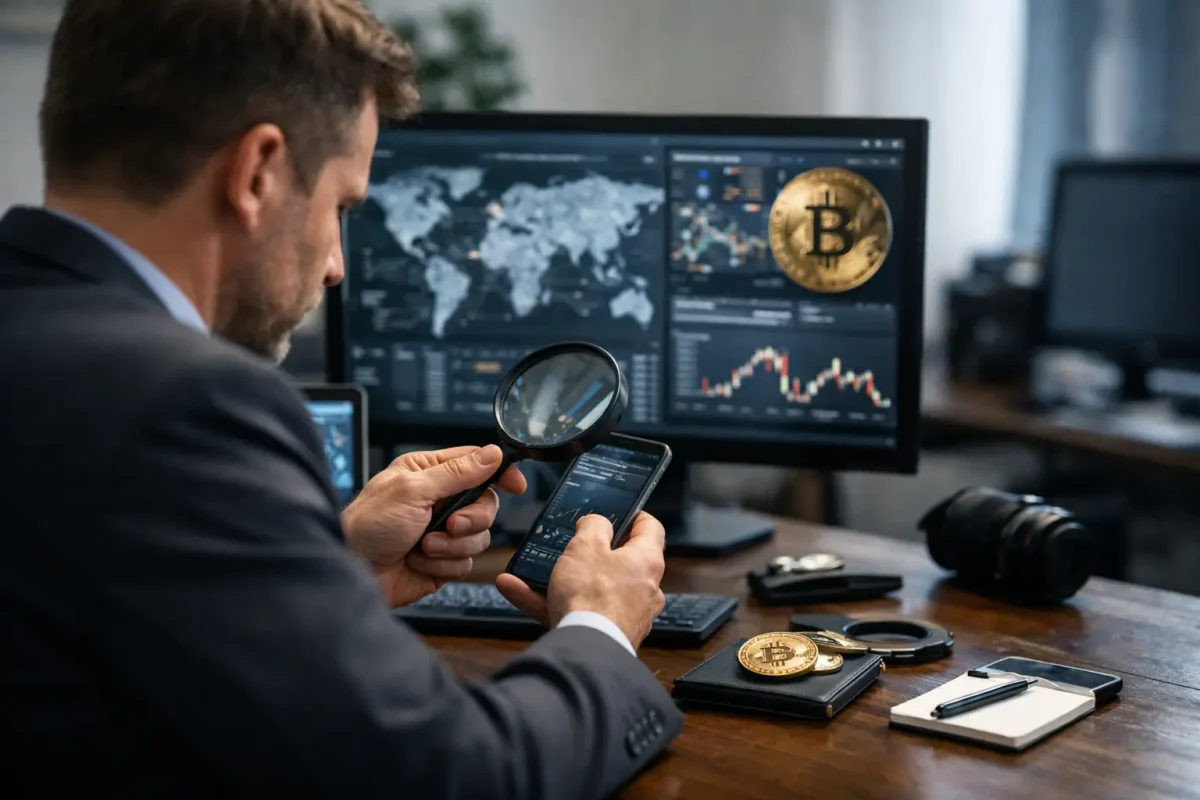
A crypto fraud investigator becomes relevant the moment a crypto loss stops looking like a simple support issue. Your wallet may show an unauthorized transfer. A trading platform may suddenly block withdrawals. A person you trusted may have disappeared after receiving Bitcoin, USDT, or Ethereum. The transaction is visible, but the path forward is not.
That gap is where professional blockchain forensics matters. A legitimate investigation does not rely on vague promises or claims that a transaction can simply be reversed. It starts by preserving evidence, tracing on-chain activity, identifying fraud patterns, and determining whether there is a credible route to recovery, reporting, or protective action.
What a Crypto Fraud Investigator Does
A crypto fraud investigator examines the technical and behavioral evidence connected to a loss. This can include blockchain transactions, wallet addresses, exchange deposit patterns, communication records, fake investment dashboards, malicious smart-contract approvals, and the timeline of events that led to the transfer.
Blockchain transactions are public on many networks, but public does not mean easy to interpret. A thief may move assets through multiple wallets, swap tokens, bridge funds to another network, or send assets to a centralized exchange. The investigator’s role is to turn that raw transaction history into a defensible picture of what happened and where the assets may have gone.
This work is especially valuable when victims have been told that nothing can be done because crypto is irreversible. The transaction itself may not be reversible, but tracing it can still identify points of exposure, including wallets tied to known scam activity or deposits that appear to reach a service provider. Whether action is possible depends on the facts, timing, jurisdiction, the asset involved, and how quickly the funds continue moving.
The Difference Between Investigation and a Recovery Promise
A professional investigator should never guarantee that stolen crypto will be recovered. No legitimate service can control a scammer’s wallet, force a blockchain reversal, or promise a specific financial result before evidence has been reviewed.
What they can do is establish the facts. They can determine whether a wallet is linked to a larger scam cluster, reconstruct the path of funds, identify potential exchange destinations, and prepare organized evidence for the appropriate next steps. In some cases, a forensic report supports communications with an exchange, attorney, insurer, bank, or law enforcement agency. In others, it reveals that a supposed investment platform was fraudulent from the beginning and helps prevent additional losses.
That distinction protects you. Anyone who says they can recover every dollar immediately, asks for your seed phrase, or demands payment in crypto before providing a clear scope of work should be treated with extreme caution. Recovery scams often target people who have already lost money once.
Cases That Need Blockchain Forensics
Fraud investigations are not limited to one type of scam. The most urgent cases often involve fake investment websites that show fabricated profits while refusing withdrawals. Romance and confidence scams can also involve weeks or months of manipulated conversations before a victim is directed to a fraudulent trading platform.
Other cases begin with compromised wallet access. A user may sign a malicious transaction, expose a private key, approve a token allowance, or install a fake wallet application. The result can be an unauthorized transfer that appears to happen in seconds.
Business owners may face a different problem: a payment is sent to a convincing but fraudulent vendor address, an employee is socially engineered into transferring stablecoins, or funds are diverted during a compromised invoice process. The investigation must account for both the blockchain evidence and the operational trail around the transaction.
A crypto fraud investigator may also determine that the case is not theft at all. Assets sent to the wrong network, a confusing token migration, a corrupted wallet file, or an inaccessible wallet can require technical recovery work rather than a fraud trace. Getting that diagnosis right early prevents wasted time and unnecessary exposure.
How a Professional Investigation Should Begin
The first hours after discovering a loss can matter. Do not delete messages, close accounts, reset devices blindly, or continue sending funds to anyone who claims a fee, tax, deposit, or verification payment will release your crypto. Scammers frequently use those demands to extend the fraud.
Preserve the information you have. That includes transaction IDs, wallet addresses, exchange records, screenshots of the platform or conversation, email headers, phone numbers, dates, payment instructions, and any files provided by the suspected scammer. Record what happened in chronological order while details are still clear.
Then secure anything that may still be at risk. Change passwords from a trusted device, enable stronger account protection, revoke suspicious token permissions where appropriate, and move remaining assets only if you understand the security implications. If a private key or seed phrase may be exposed, assume the associated wallet is no longer safe.
A professional case evaluation should clarify the asset type, blockchain network, transaction history, known wallet addresses, and the client’s recovery objective. It should also explain the limits of the work. Clear expectations are a sign of a serious forensic process, not a lack of confidence.
A Four-Stage Forensic Recovery Process
At Annonymously, the recovery process is designed to give clients a structured path through a stressful technical situation.
- Case evaluation: The available evidence is reviewed to identify the nature of the loss, the relevant wallets, and the likely technical or fraud-related issues.
- Blockchain forensic analysis: Transaction flows are traced across relevant networks. Wallet behavior, scam patterns, and potential connections to other addresses are assessed using advanced investigative methods.
- Recovery execution: Depending on the findings, work may involve wallet-access restoration, wallet reconstruction, transaction analysis, targeted recovery action, or preparation of evidence for external escalation.
- Secure outcome delivery: Clients receive clear guidance on findings, available next steps, and secure handling of any restored wallet access or recovered digital assets.
This approach is not a substitute for law enforcement or legal advice when those are needed. It is a specialized service for the technical evidence and blockchain analysis that conventional support channels often cannot provide.
What Good Evidence Can Reveal
The value of a forensic investigation is not limited to locating one destination address. A well-developed trace can reveal recurring deposit wallets, transaction timing patterns, cross-chain movements, token swaps, and relationships between addresses that initially appear unrelated.
For example, a fake trading platform may instruct victims to deposit USDT into changing wallet addresses. Individual deposits can look isolated. When those addresses are analyzed together, they may show common consolidation behavior, repeated transfer routes, or connections to a broader scam infrastructure. That pattern can strengthen the evidence available for escalation.
However, every case has limits. Privacy-focused tools, decentralized exchanges, rapid bridging, and cash-out activity can make tracing more difficult. A smaller loss may not justify the same level of investigative effort as a large theft. The practical question is not whether tracing is theoretically possible, but whether the evidence supports a proportionate and realistic path forward.
How to Choose a Legitimate Crypto Fraud Investigator
Choose a provider that explains its process before asking you to commit. You should understand what information is needed, what analysis will be performed, how your information will be handled, and what the provider can and cannot promise.
Confidentiality is essential because fraud cases often contain wallet balances, identity documents, private communications, and sensitive financial records. A serious service should request only the materials needed for assessment and should never ask for a seed phrase or private key as a condition of investigating stolen funds.
Look for technical clarity rather than dramatic claims. Terms such as transaction tracing, wallet clustering, cross-network analysis, and forensic reporting should be connected to a practical client outcome. The right investigator will speak plainly about risk, evidence, cost, and the possibility that recovery may not be available.
If you are facing a suspected crypto scam, act carefully rather than desperately. Preserve the evidence, stop further payments, secure what remains, and seek an informed evaluation before a second scammer turns an already difficult loss into a larger one.
