
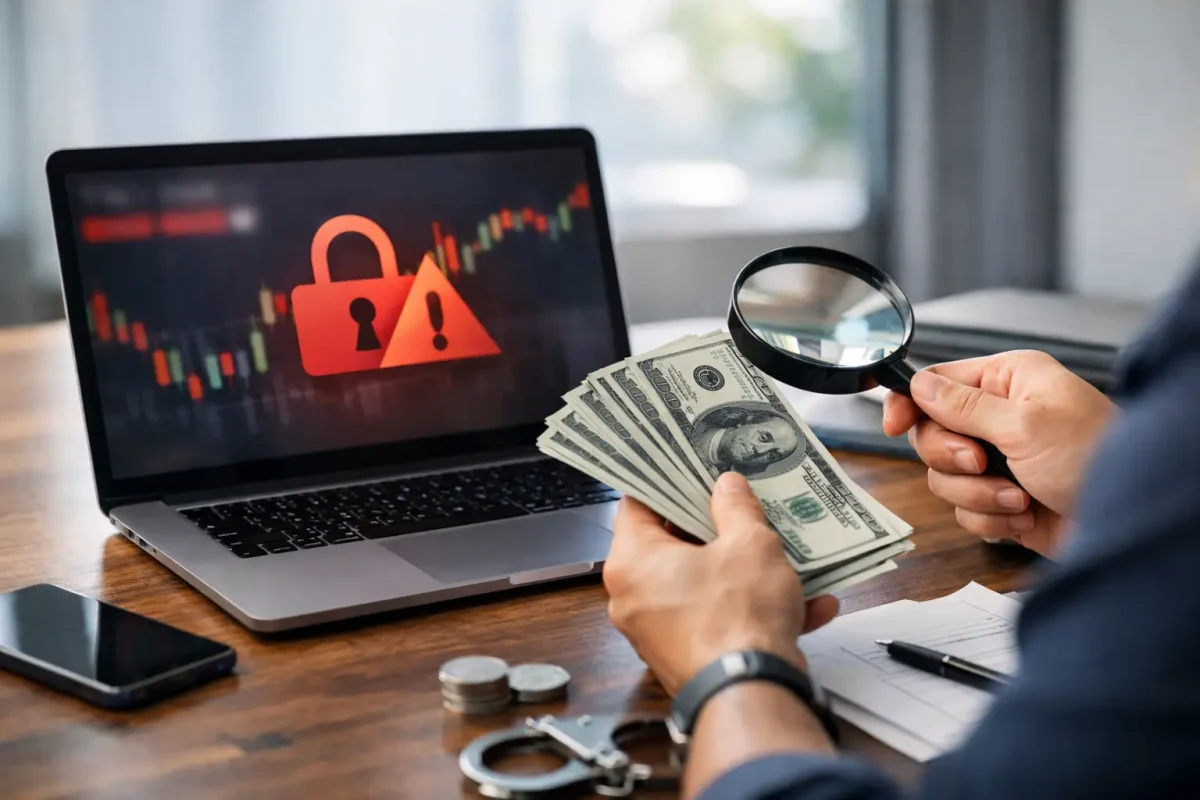
The moment a trading dashboard stops honoring withdrawals, the situation changes. What looked like an investment account may be a controlled interface built to display fictional profits and demand more deposits. To recover funds from a fake trading platform, speed matters, but so does discipline. Sending another payment, arguing with the supposed broker, or trusting the first person who promises a guaranteed refund can deepen the loss.
Fake trading platforms often borrow the appearance of legitimate exchanges. They use polished charts, account managers, fabricated gains, and convincing customer support. Some allow a small early withdrawal to build trust before blocking larger requests. Others claim that taxes, anti-money-laundering fees, account upgrades, or liquidity charges must be paid before assets can be released. These demands are common signs that the platform was never operating a genuine trading account.
How to Recover Funds From a Fake Trading Platform
A credible recovery effort begins by separating what is still under your control from what has already moved on-chain or through a payment provider. If you still have access to an account, wallet, email address, exchange profile, or payment method connected to the fraud, preserve access. Do not delete messages, reset devices, or erase browser history in an attempt to make the experience disappear. Those records may contain the evidence needed to map the fraud.
Stop all further payments immediately. A fake platform may claim that one final transfer will release your balance. It may introduce a new person posing as a compliance officer, tax agent, regulator, or recovery specialist. Legitimate asset recovery does not require victims to keep paying an unverified platform to access money that supposedly belongs to them.
Next, capture the evidence in its original form where possible. Save screenshots of the platform, balances, transaction history, chats, emails, invoices, payment instructions, and withdrawal rejection notices. Record the website address, usernames, phone numbers, bank details, wallet addresses, social-media profiles, and the dates and amounts of every transfer. Download transaction receipts from exchanges and banks rather than relying only on screenshots.
For cryptocurrency payments, transaction hashes are especially important. A transaction hash provides an immutable starting point for forensic analysis. It can show when assets left your wallet or exchange account, which address received them, and how those assets moved afterward. A dashboard balance on the fraudulent website is not proof of funds held in your name. The transaction record is often the more reliable source of truth.
Contact the payment channel quickly
Your next action depends on how the payment was made. For a bank wire, contact the bank’s fraud department immediately and request a recall or trace. The odds depend on timing, the receiving institution, and whether funds have already been withdrawn or transferred. Still, a prompt report creates an official record and may help identify accounts used in a wider fraud operation.
For card payments, ask the card issuer about a fraud dispute or chargeback. Explain clearly that the recipient misrepresented an investment or trading service. Provide documentation, but avoid exaggerating facts. A complete timeline with payment receipts and communications is more useful than a general statement that an investment went wrong.
For crypto purchased through an exchange and sent to the scam, notify the exchange’s fraud or compliance team. Provide the recipient address, transaction hash, date, amount, and the associated platform details. An exchange may not be able to reverse a completed blockchain transaction, but it can review whether the assets later reach a known or regulated service. Early reporting can preserve valuable investigative leads.
Why Blockchain Forensics Can Change the Recovery Path
Cryptocurrency transactions are generally irreversible at the protocol level. That does not mean tracing is pointless. It means recovery requires a different approach than simply requesting a reversal. Professional blockchain forensics examines the movement of assets after they leave the victim’s address.
Investigators can analyze wallet relationships, transaction timing, address reuse, asset swaps, and transfers through intermediary wallets. The purpose is to identify patterns that connect a receiving address to a larger scam network or to a point where assets may intersect with a service capable of responding to a lawful inquiry. Fraudsters often attempt to obscure movement through multiple wallets, cross-chain transfers, swaps, or mixing activity. These methods can make a case more complex, but they do not erase every analytical signal.
A strong forensic report is more than a list of wallet addresses. It organizes the evidence into a clear timeline, identifies likely transaction clusters, distinguishes verified facts from reasonable indicators, and documents the destination path of the assets. This can support reports to exchanges, payment providers, attorneys, law enforcement, and other appropriate parties.
The recovery outlook depends on several factors: how quickly the loss was reported, the asset type, transaction volume, the fraudster’s movement of funds, and whether assets reach an identifiable service. No ethical provider can promise that every case will result in recovered funds. Be cautious of anyone claiming they can reverse a blockchain transfer with a special tool or guarantee a recovery before reviewing the evidence.
Do not become a recovery-scam victim
People who have lost funds are frequently targeted again. Recovery scammers monitor public complaints, social-media posts, and victim communities. They may present themselves as hackers, regulators, law firms, blockchain agents, or former employees of the platform. Their messages are designed to exploit urgency.
Watch for demands for an upfront “release fee,” requests for your seed phrase or private keys, claims of access to a government recovery account, and promises that a hacker has already located your assets. A legitimate professional does not need your seed phrase to trace a fraudulent payment. Never share it. Whoever holds a seed phrase can control the wallet.
Be equally careful with remote-access software. Fraudsters may ask to access your computer to “verify” a wallet, guide a withdrawal, or retrieve funds. That access can expose exchange logins, banking sessions, identity documents, and files. Keep recovery communications limited to verified channels, and change passwords if you believe a scammer has seen or controlled your device.
A Professional Recovery Process Should Be Evidence-Led
A reputable crypto recovery engagement starts with case evaluation, not a promise. The first objective is to establish what happened, identify available evidence, determine the transaction path, and assess whether a practical recovery route exists. This protects clients from spending time and money on approaches that have no technical or legal basis.
At Annonymously, the process can include secure evidence review, blockchain forensic analysis, wallet and transaction tracing, scam-wallet clustering, and targeted recovery execution through BlockSprint AI™. The work is designed to turn scattered messages, payment records, and wallet data into a defensible picture of the loss. For victims who have been pressured, misled, or ignored by a fraudulent platform, that clarity is a meaningful first step.
Privacy should be part of the process from the beginning. Share only the records needed for evaluation, use secure communication methods, and retain copies of every document you provide. If identity documents or account records are required for a bank, exchange, or formal report, confirm why they are needed and how they will be protected.
It is also sensible to report the fraud to the relevant financial and law-enforcement authorities in your jurisdiction. These reports may not produce an immediate personal recovery, but they create a record, help connect cases, and may support broader action against the operators. If the loss is substantial or involves business funds, legal advice may help you understand reporting obligations, preservation steps, and available remedies.
A fake trading platform is built to make victims feel isolated and powerless. The practical response is the opposite: stop further loss, preserve every record, establish the transaction trail, and use qualified support where the facts justify it. Your next decision should protect your remaining assets and strengthen the evidence that may help bring your funds within reach again.
