
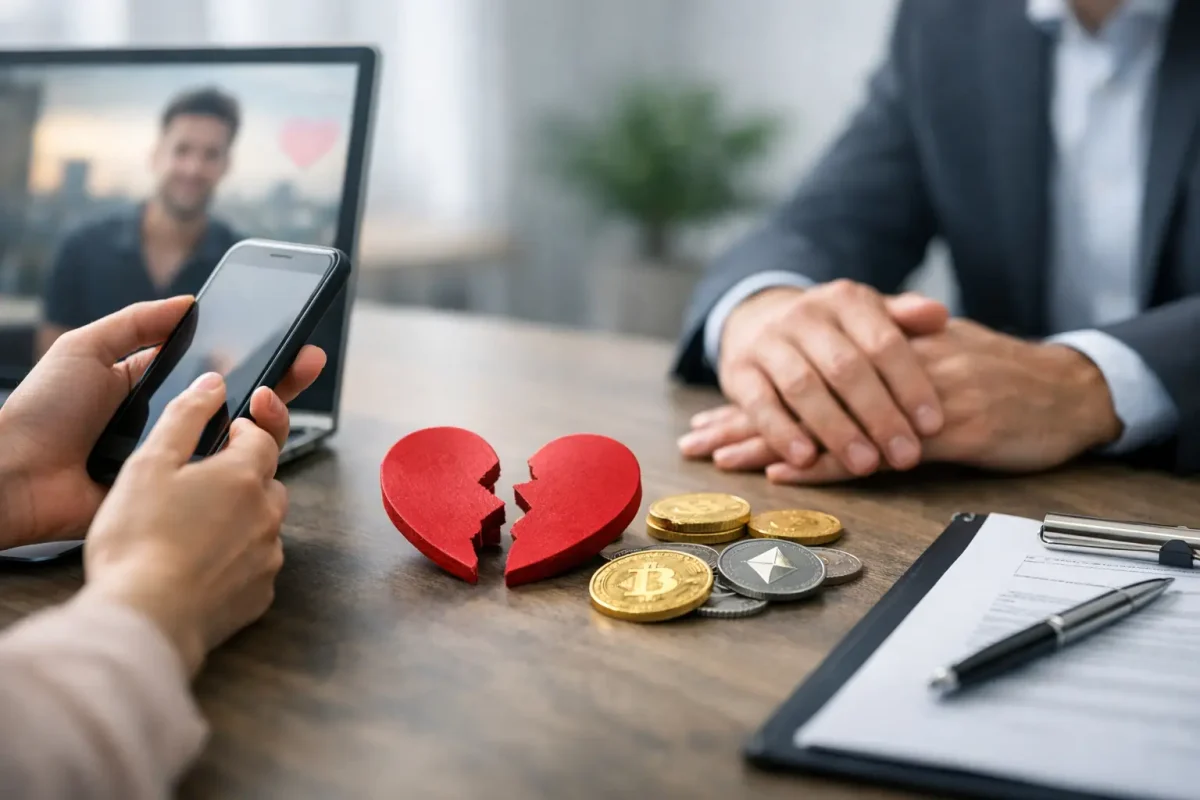
A romance scam can feel personal long before it becomes financial. The person may have spent weeks building trust, sharing daily messages, and presenting a believable investment opportunity before asking you to send cryptocurrency. Cryptocurrency romance scam recovery help begins by treating that loss as both a fraud event and a technical investigation – not a private mistake you have to solve alone.
Once crypto leaves your wallet, the transaction is generally irreversible. That does not mean every path forward is closed. Blockchain records can preserve valuable evidence, and a professional forensic review may identify wallet movements, connected scam addresses, platform touchpoints, and recovery options. The first hours and days matter because scammers often move stolen assets quickly through multiple wallets, exchanges, bridges, or swap services.
What a cryptocurrency romance scam looks like
Romance scammers rarely begin by asking for money directly. They create familiarity first, often through a dating app, social media platform, messaging app, or accidental text. Their profile may show an attractive professional, a successful trader, or a person temporarily working overseas. They may avoid video calls, make excuses for not meeting, or use stolen photos and carefully scripted messages.
The financial pitch commonly follows a pattern. The scammer introduces cryptocurrency trading, shares screenshots of supposed profits, and directs the victim to a website or app that appears to be a legitimate exchange. In many cases, the site is controlled by the fraud operation. The balance shown on screen is not proof that real trading occurred.
Victims are often encouraged to make a small first deposit, then a larger one after seeing artificial gains. When they try to withdraw, the platform may demand a tax payment, security deposit, anti-money-laundering fee, or account verification charge. Those demands are designed to extract more funds. Paying another fee almost never releases the original balance.
Cryptocurrency romance scam recovery help: act quickly
Your immediate priority is to stop additional loss and preserve the information needed for a forensic investigation. Do not argue with the scammer, send a final payment, or accept an offer to “verify” your wallet. A scammer who realizes they have been identified may delete messages, change wallet addresses, or pressure you into transferring more funds.
Secure every account the scam may have touched. Change passwords for your email, exchange accounts, social accounts, and banking apps. Enable multi-factor authentication using an authenticator app where available. If you shared a seed phrase, private key, wallet backup, remote-access code, or screen-sharing access, assume that wallet is compromised. Move any remaining assets to a new wallet created on a secure device, if you can do so safely.
Then preserve evidence before cleaning up devices or deleting conversations. Save full chat histories, usernames, profile URLs or handles, phone numbers, email addresses, screenshots of the trading platform, deposit instructions, withdrawal messages, and payment demands. Record the dates, times, amounts, assets, networks, transaction IDs, and receiving wallet addresses for every transfer.
A simple written timeline is also useful. Include when contact began, how the investment was presented, each amount sent, and any promises or threats made. Details that feel minor can later help connect transactions and establish the fraud pattern.
Why blockchain tracing matters
Crypto transactions are public on many blockchains, but the information is not self-explanatory. A wallet address does not automatically reveal the person behind it, and scammers deliberately use techniques meant to make tracing difficult. They may split funds across many addresses, convert assets, move them between networks, or send them through services that complicate the transaction trail.
Advanced blockchain forensics follows the movement of assets and evaluates transaction patterns. Investigators can identify related wallet clusters, monitor onward transfers, and document points where stolen funds may interact with a centralized exchange or other service provider. That evidence can support reports to law enforcement, exchanges, financial institutions, and legal counsel where appropriate.
Recovery is not guaranteed. The outcome depends on the asset, blockchain, transaction history, how quickly the case is reported, whether funds reach an identifiable service, and the cooperation available through the relevant channels. A credible recovery provider will be clear about these limits rather than promising to reverse a completed blockchain transaction.
Avoid a second scam during recovery
People who lose money to romance fraud are frequently targeted again. Recovery scammers monitor public complaints, impersonate investigators, or claim they have already located your funds. They may request an upfront crypto payment, remote access to your computer, your seed phrase, or a percentage of recovered assets before they provide any real analysis.
Be cautious when someone contacts you unexpectedly and claims they can recover funds immediately. No legitimate professional needs your private key or seed phrase to trace a transaction. No one can lawfully guarantee that stolen cryptocurrency will be returned. And a demand to pay a tax or release fee in cryptocurrency should be treated as a serious warning sign.
Before engaging a service, ask what evidence it will review, how it protects confidential information, what its investigation process involves, and what deliverables you can expect. A professional engagement should explain scope, fees, limitations, and the difference between forensic tracing and a guaranteed asset return.
A structured recovery process
A strong response is methodical. It begins with a confidential case evaluation to establish the loss type, assets involved, transaction data, and available evidence. The next stage is blockchain forensic analysis, where investigators trace wallet activity, review scam-related patterns, and determine whether meaningful recovery avenues may exist.
From there, the strategy depends on the facts. Some cases require exchange outreach and evidence packages. Others involve wallet security, account restoration, reporting support, or continued monitoring of stolen asset movements. If a victim also lost access to a wallet during the incident, technical wallet restoration may be part of the work.
Annonymously approaches complex digital-asset losses through professional investigation and BlockSprint AI™ analysis, combining transaction tracing, fraud-pattern detection, wallet clustering, and targeted recovery execution. The objective is to replace confusion with a clear, secure plan based on what the blockchain and available evidence actually show.
Report the fraud through the right channels
A forensic investigation does not replace official reporting. In the United States, report the incident to the FBI’s Internet Crime Complaint Center, the Federal Trade Commission, and your local law enforcement agency. If you used an exchange, bank, card issuer, wire service, or payment platform at any point in the transaction path, notify its fraud team promptly.
Provide factual documentation rather than assumptions. Include wallet addresses, transaction IDs, amounts, dates, communication records, and the name of the fraudulent website or app. Keep copies of every report and case number. International victims should also report the matter to the relevant cybercrime and fraud authorities in their country.
Do not be discouraged if an initial support response is limited. Consumer support teams may not have the technical capacity to analyze a multi-wallet blockchain trail. That is where organized evidence and specialist forensic work can make a material difference.
Protect your next move
The emotional impact of a romance scam often creates urgency to recover money as quickly as possible. That urgency is understandable, but it can make high-pressure offers seem credible. Pause before sending any additional funds, installing software, or sharing sensitive wallet information with anyone.
Focus on the actions you can control: secure your accounts, document the evidence, report the fraud, and obtain a professional assessment grounded in transaction data. The right next step is not another payment to a stranger. It is a confidential, evidence-led review that gives you a realistic view of the path ahead.
